
$149.99
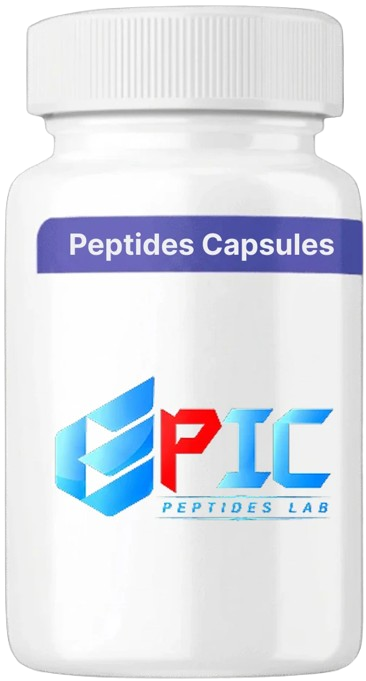
SLU-PP-332 is a 290 dalton small molecule, not a peptide, and it arrives here as thirty capsules rather than as powder in a vial. A capsule is a mixture, and that changes what any certificate can establish. Laboratory research use only.
Epic Peptides Lab · Research Use Only
Thirty capsules · a formulated article rather than a vial of powder
Almost everything in this catalogue arrives as loose powder in a sealed vial, which can be weighed, dissolved and analysed directly. SLU-PP-332 arrives as thirty capsules. A capsule is a manufactured mixture, and the difference between analysing a mixture and analysing a powder runs through everything below.
| Property | Value |
|---|---|
| Compound | SLU-PP-332 |
| Article class | Synthetic small molecule. Not a peptide and not a protein |
| CAS number | 303760-60-3 |
| Molecular formula | C18H14N2O2 |
| Molecular weight | 290.32 |
| Chemical name | 4-hydroxy-N-[(Z)-naphthalen-2-ylmethylideneamino]benzamide |
| Structural class | An acylhydrazone linking a naphthalene ring to a hydroxybenzamide |
| Reported target | The three estrogen-related receptors, ERRα, ERRβ and ERRγ |
| Receptor family | Orphan nuclear receptors. No endogenous ligand has been established |
| Reported potency, ERRα | EC50 in the region of 98 nM |
| Reported potency, ERRβ | EC50 in the region of 230 nM |
| Reported potency, ERRγ | EC50 in the region of 430 nM |
| Origin | Characterised in the Burris laboratory at Saint Louis University |
| Presentation | Thirty capsules, each declared at 1000 micrograms |
| Total declared content | 30 milligrams across the container |
| Reconstitution | None. This is a solid oral format, not a lyophilized powder |
| Storage | Sealed, cool, dry and away from light. Do not refrigerate without desiccation |
The word peptide appears constantly on research listings for SLU-PP-332, and it is wrong.
A peptide is a chain of amino acid residues joined by amide bonds between an alpha carboxyl and an alpha amino group. SLU-PP-332 has no residues, no sequence and no chain.
SLU-PP-332 is a single small organic molecule of 290 daltons, built from a naphthalene ring joined through an acylhydrazone linkage to a hydroxybenzamide.
For comparison, the smallest peptides in this catalogue sit above 700 daltons and the largest run past thirty thousand.
The distinction is not pedantry, because almost every handling rule in this catalogue follows from the peptide chemistry rather than from anything general.
Adsorption to glass follows from charged side chains. Oxidation follows from methionine. Deamidation follows from asparagine and glutamine. Aggregation follows from backbone hydrogen bonding.
None of those routes exists on SLU-PP-332.
What does exist is the acylhydrazone linkage, a carbon to nitrogen double bond joining the two halves of the molecule. Linkages of that type are known to be reversible under acidic aqueous conditions, which is a solution stability question rather than a solid state one.
The chemical name also encodes a geometry, the Z descriptor, which specifies which side of that double bond the two larger groups sit on. A preparation carrying the other geometry is a different compound with different behaviour.
So the useful summary is that the peptide handling knowledge a researcher brings to this catalogue does not transfer to this article, and the small molecule questions that do apply are not the ones the listings discuss.
A vial of lyophilized powder is a single substance. Whatever is in it can be weighed, dissolved and put through an instrument, and the number that comes back describes the contents.
A capsule is not a single substance. It is a shell plus a fill, and the fill is a blend of active compound with whatever excipients were needed to make thirty units of consistent mass.
At 1000 micrograms of SLU-PP-332 per unit, the active is a minority component of the fill by a wide margin. Most of the mass in each capsule is not the compound.
That is entirely normal for a solid format and it is not a criticism. It is a fact with consequences.
The first consequence is that opening a capsule and weighing what falls out tells you almost nothing.
The second is that the compendial question for a formulated article is not purity but uniformity. Purity asks what fraction of the material is the intended compound. Uniformity asks whether unit seventeen contains the same amount as unit three.
Those are different measurements and they fail for different reasons.
Blend segregation, the tendency of a powder mixture to separate by particle size or density during handling and filling, is the classic route to a uniformity failure, and it has been reviewed at length in the pharmaceutical manufacturing literature.
A blend can be perfectly pure and still fill unevenly.
The third consequence is that the excipients are part of the article. Anything added to a preparation ends up in the experiment, and a cellulose filler behaves differently from a lactose one in an aqueous system.
A certificate written for a vial of powder does not answer the questions the SLU-PP-332 capsule format raises, and a supplier who supplies one for the other has not understood the article.
Identity of the active by mass spectrometry or by nuclear magnetic resonance, run on the fill rather than on the intact unit.
Purity of the active substance before encapsulation, by chromatography, with the method stated.
Assay per unit, meaning the measured quantity of active found in a capsule rather than the quantity intended.
Uniformity across units, which requires more than one capsule to have been tested and the spread to be reported.
A full excipient declaration, since those materials enter the experiment alongside the compound.
Confirmation of the geometry at the acylhydrazone linkage, because the chemical name specifies one and a synthesis can deliver a mixture.
Lot number, manufacturing date and the storage condition the stated figures apply to.
A certificate that reports only a purity percentage has described the powder that went into the capsules and has said nothing about the capsules themselves, which is the article actually being purchased.
ERRα, ERRβ and ERRγ are nuclear receptors, meaning they act as transcription factors rather than as cell surface signalling proteins.
They are named for their sequence resemblance to the estrogen receptors, and the name misleads. They do not bind estrogen and they are not part of estrogen signalling.
They are classed as orphan receptors because no endogenous ligand has been established for them, which is why a synthetic agonist is useful as a tool at all.
Their activity is governed largely by coactivator availability, particularly the PGC-1 family, rather than by a circulating ligand.
The gene networks they control were reviewed comprehensively by Giguere, and they centre on energy handling: mitochondrial biogenesis, oxidative phosphorylation and substrate use.
Billon and colleagues reported that SLU-PP-332 activates all three in transcriptional assays, with the highest potency at ERRα, and that a skeletal muscle cell line showed raised mitochondrial function and cellular respiration.
The same paper reported that mice receiving the compound covered greater distances in treadmill work than vehicle controls, and that the transcriptional response in muscle depended on ERRα.
That is mouse data from a single laboratory, published in 2023, and it is the foundation of essentially everything written about this molecule since.
The SLU-PP-332 literature is worth reading directly rather than through summaries, because the summaries have travelled a long way from what the experiments measured.
A pan-agonist engages every member of a receptor family. SLU-PP-332 engages three, with reported EC values spanning roughly a factor of four from ERRα to ERRγ.
A factor of four is not selectivity.
At a concentration chosen to engage ERRα substantially, the other two are also engaged to a meaningful degree, and any observed change has three candidate sources rather than one.
The three receptors are not interchangeable. Their tissue distributions differ and the gene sets they govern overlap without being identical, so attributing an effect to the family is a weaker statement than attributing it to a member.
Separating them requires a design that does the work: a knockout or knockdown system for the receptor of interest, or a selective antagonist run alongside.
Billon and colleagues used a receptor-null approach for exactly this reason, and the ERRα dependence they reported is a claim about the design rather than about the molecule alone.
Running the compound by itself and reading a transcriptional output establishes that something in the family was engaged. It does not establish which.
This is a recurring theme across the tool compounds in this catalogue, and it is unusually clear cut here because the potencies are so close together.
A thousand micrograms is a milligram. Writing it the long way is a labelling convention rather than a chemical statement.
The convention comes from formats where the quantity per unit is genuinely small and expressing it in milligrams would put a decimal point in front of every number.
Here it is exactly one milligram of declared SLU-PP-332 per capsule, and thirty milligrams across the container.
The figure worth carrying into a record is the total, because a container of thirty units is one lot with one assay result behind it.
Comparing a container of capsules against a vial elsewhere in this catalogue is also less direct than it looks.
A 10 milligram vial contains 10 milligrams of substance, subject to net content questions. A container of thirty capsules contains thirty declared milligrams distributed across thirty separately manufactured units, each carrying its own filling variation.
The totals look comparable and the uncertainty structures are not.
Solid oral formats like the SLU-PP-332 container have their own failure routes, and none of them is the freeze-thaw and adsorption set that dominates the rest of this catalogue.
Store sealed, cool, dry and out of light. The container closure is doing real work here, because capsule shells are moisture sensitive and a gelatin shell that takes up water becomes tacky and can distort.
Refrigeration without desiccation is a common mistake. Moving a container between a cold shelf and a warm room drives condensation onto the shells, which is worse than leaving it at a stable room temperature.
Do not decant capsules into a secondary container unless the closure and the desiccant travel with them.
Do not open capsules to weigh the fill. The fill is a blend, the active is a minority of it, and a weighed portion of blend is not a weighed portion of compound.
Where an aqueous solution is required for an in vitro system, the material to dissolve is characterised powder, not capsule fill.
The acylhydrazone linkage is the solution stability point rather than the storage one. Prepare working solutions close to the time of use, keep the pH away from acidic extremes, and note how long a stock sat before it was used.
Record lot, the assay per unit as stated, the count of units at receipt, storage temperature and the date the container was first opened.
The open date matters more than usual on a moisture sensitive format, because the container is opened repeatedly across the life of a study rather than once.
Selected references on the compound, on the receptor family it engages and on the analytical questions raised by formulated solid articles.
Is SLU-PP-332 a peptide?
No. SLU-PP-332 is a synthetic small molecule of 290 daltons with no amino acid residues and no sequence. Research listings describe it as a peptide routinely and the description is incorrect.
What does SLU-PP-332 target?
SLU-PP-332 engages the three estrogen-related receptors, ERR alpha, beta and gamma. These are nuclear receptors acting as transcription factors, and the published work reports agonist activity at all three.
Do the estrogen-related receptors bind estrogen?
No. They are named for sequence resemblance to the estrogen receptors and are not part of estrogen signalling. No endogenous ligand has been established for any of the three.
What does pan-agonist mean here?
That the compound engages every member of the family rather than one. Reported potencies span roughly a factor of four, which is too narrow to give useful selectivity at a working concentration.
Why does that complicate an experiment?
Because an observed change has three candidate sources. Attributing it to one receptor requires a knockout system or a selective antagonist run alongside, not the compound on its own.
What is different about a capsule format?
A capsule is a shell plus a blend, and the active is a minority of the fill mass. The compendial question becomes uniformity between units rather than purity of a single powder.
Can the capsules be opened and weighed?
Not usefully. A weighed portion of blend is not a weighed portion of compound, because the excipients dominate the mass and may not be evenly distributed within a single unit.
What is blend segregation?
The tendency of a powder mixture to separate by particle size or density during handling and filling. It is the classic route to a uniformity failure and it can occur in a perfectly pure blend.
What should the certificate add for a capsule?
Assay per unit, the spread across units, and a full excipient declaration. A purity percentage alone describes the powder before encapsulation rather than the article being purchased.
What does the Z in the chemical name specify?
The geometry at the carbon to nitrogen double bond in the acylhydrazone linkage. The opposite geometry is a different compound, so the certificate should confirm which one is present.
Is 1000 micrograms the same as one milligram?
Yes. The long form is a labelling convention. Thirty units at 1000 micrograms each is thirty milligrams of declared active across the container.
What does the published mouse work actually report?
Raised mitochondrial function in a skeletal muscle cell line, an ERR alpha dependent transcriptional response in muscle, and greater treadmill distances in mice than in vehicle controls.
SLU-PP-332 is sold exclusively for laboratory research use. It is not a drug, food, or cosmetic product, and it is not a dietary product of any kind. It is not approved by the FDA or any comparable authority for human or veterinary use, it is a small molecule rather than a peptide and the handling conventions used elsewhere in this catalogue do not apply to it, the published record consists largely of one laboratory group working in rodent and cell systems, its target receptors are engaged non-selectively so published findings cannot be attributed to a single receptor, and no compound in this range is offered for any human or veterinary purpose. This product is not intended to diagnose, treat, cure, or prevent any disease. It must not be given to humans or animals. Purchase is restricted to qualified researchers and institutions operating within applicable laws. All handling is the responsibility of the purchasing laboratory.
| Weight | 0.5 lbs |
|---|---|
| Dimensions | 3 × 3 × 4 in |
The same verification the labs that use our compounds demand — documented, transparent, and enforced on every order.

Independent HPLC and mass-spec testing confirms identity and purity on every batch.

A full certificate of analysis is published and downloadable for every lot we ship.

Tracked, discreet packaging with reshipment coverage on qualifying orders.

Orders confirmed before 12 PM PT on business days ship the same day from our US-based facility.
Enter your details to access our catalog, COA library,
and research compound database.
By submitting you agree to receive email communications from Epic Peptides Lab You can unsubscribe at any time. All products for in vitro research use only.

Restock alerts, new compounds and fresh lab results.
We’ll email your code straight away – 15% off, one-time use.
Research updates only. Unsubscribe any time.
Reviews
There are no reviews yet.