
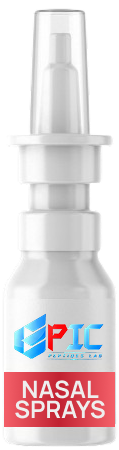
$219.99
IGF-1 DES nasal spray supplies the DES(1-3) analogue, a 67-residue protein missing the first three residues of native IGF-1, in a metered solution format. Laboratory research use only.
Epic Peptides Lab · Research Use Only
DES(1-3) IGF-1 · 67 residues · approximately 7,371 Da
IGF-1 DES nasal spray supplies DES(1-3) IGF-1, a 67-residue protein at roughly 7,371 daltons, as a metered aqueous solution. The name records a deletion: the first three residues of native insulin-like growth factor 1 have been removed, and that three-residue absence is the whole modification.
| Property | Value |
|---|---|
| Compound | DES(1-3) IGF-1 |
| Residue count | 67 |
| Molecular weight | Approximately 7,371 g/mol. Confirm against the lot certificate |
| Parent molecule | Human insulin-like growth factor 1, 70 residues |
| Modification | Deletion of the amino-terminal tripeptide Gly-Pro-Glu |
| Deleted fragment | GPE, itself a studied neuroactive tripeptide with its own literature |
| Purpose of the deletion in published work | Reduced affinity for IGF binding proteins |
| Structural class | Folded protein with internal disulfide bonds, not a linear peptide |
| Higher-order structure | Present. Activity depends on correct folding, not sequence alone |
| Chromophore | Aromatic residues present. 280 nm absorbance applies for total protein |
| Natural occurrence | Reported as a naturally occurring form in some tissues, not solely a synthetic construct |
| Format | Metered nasal spray, solution state |
| Physical state | Aqueous solution, supplied ready to use |
| Purity | Per lot-specific certificate of analysis |
| Storage | 2-8°C, protected from light. Do not freeze |
| Regulatory status | No approved human or veterinary formulation in any jurisdiction |
The modification is a subtraction rather than an addition, which is unusual among engineered protein analogues and worth understanding precisely.
Native IGF-1 begins with the tripeptide Gly-Pro-Glu. This analogue starts at residue four, so those three residues are simply absent.
Their absence matters because that amino-terminal region is part of what the IGF binding proteins recognise. Remove it and the association weakens substantially.
The result is a protein that stays free rather than bound, which is the same objective the Long R3 analogue pursues by the opposite route of adding bulk.
The deleted tripeptide is not a nonentity in its own right. Gly-Pro-Glu, usually written GPE, has its own published literature as a neuroactive fragment.
That is an unusual situation. The modification here produces two species of independent research interest, the truncated protein and the released tripeptide.
It also means that a preparation contaminated with residual GPE carries a fragment with its own reported activity rather than an inert impurity.
This form has been reported to occur naturally in some tissues, so it is not purely a laboratory construct, which distinguishes it from most engineered analogues.
The deletion has a second consequence that is easy to overlook. Removing a glutamate takes a negative charge off the molecule at physiological pH.
That shifts the isoelectric point upward, which alters chromatographic retention and changes how readily the protein adsorbs to container surfaces.
For a product held in solution at low concentration, adsorption behaviour is not a footnote. It determines how much protein survives the journey from bottle to nozzle.
The extinction coefficient changes as well, so a concentration calculated from the native IGF-1 value rather than from this sequence will be wrong.
The two verification questions for this molecule sit at opposite ends of the difficulty scale, and suppliers tend to answer only the easy one.
The deletion changes the mass by roughly 284 daltons, the combined residue mass of glycine, proline and glutamate.
That puts this analogue near 7,371 against roughly 7,649 for native IGF-1, a gap any mass spectrometer resolves without difficulty.
Confirming the truncation is therefore trivial. A certificate reporting the measured mass has answered that question completely.
Folding is the hard part. This protein contains internal disulfide bonds and adopts a defined three-dimensional structure, and receptor engagement depends on that structure.
Scrambled disulfides produce an isomer with an identical mass. So mass spectrometry cannot distinguish correctly folded from misfolded material at all.
Circular dichroism reports secondary structure content, size exclusion chromatography reports aggregation state, and a receptor assay reports function. Those are the methods that answer it.
Asking which of the three were run is the most informative question available for this compound, and a chromatographic purity figure does not substitute for any of them.
IGF-1 DES nasal spray delivers a protein rather than a peptide. The transport consequence is the dominant fact about the format.
Transport across the nasal epithelium falls away steeply as molecules get larger, and somewhere near 1,000 daltons the paracellular route between cells stops working efficiently.
At roughly 7,371 daltons this molecule sits far above that transition, more than seven times the transition weight.
Reported nasal bioavailability for proteins in this size class is generally well under one percent without an absorption enhancer, with wide variation between applications.
It is smaller than IGF-1 LR3 at roughly 9,111, which places it marginally better on the size variable, though both sit well into the region where transport is poor.
Stating that plainly is more useful than implying otherwise. Anyone planning quantitative work by this route should measure delivered amount rather than infer it from metered volume.
The published literature on this molecule used parenteral routes, and the figures in it describe those routes rather than intranasal exposure.
Every consideration that applies to a folded protein in water applies to IGF-1 DES nasal spray, and they are more demanding than for the small peptides in this range.
Lyophilized protein is comparatively stable, since structure is locked in the solid state and the degradation routes requiring water are unavailable.
In aqueous solution the molecule is subject to aggregation, surface adsorption, disulfide scrambling and slow unfolding.
Aggregation removes protein from the active pool and is frequently irreversible, and it is also invisible to mass spectrometry of the monomer and to a denaturing purity chromatogram.
Size exclusion chromatography is the method that detects it, and it is worth requesting for any protein product sold in solution.
Surface adsorption matters at the low concentrations typical of a spray, since protein lost to the container wall never reaches the nozzle.
Agitation is a specific hazard, because shaking creates an air-water interface where proteins unfold. Invert gently rather than shaking.
A lyophilized vial remains the more defensible format for a molecule of this size, and the spray trades stability for delivery convenience.
Two IGF analogues appear in this spray range and they represent opposite solutions to the same problem.
IGF-1 LR3 is longer than the native protein at 83 residues, having gained a 13-residue amino-terminal extension plus an arginine substitution at position three.
This compound is shorter at 67 residues, having lost the amino-terminal tripeptide entirely.
Both changes target the same interaction. That is association with the IGF binding proteins that sequester circulating IGF-1.
One adds bulk to obstruct recognition and one deletes the recognition site outright. As a pair they are an instructive natural experiment in how that interaction works.
The mass difference is large, roughly 7,371 against roughly 9,111, so mass spectrometry separates them trivially and no supplier has an excuse for confusing them.
They are separate compounds with separate published records, and a result obtained with one does not transfer to the other without an explicit argument.
A truncated protein carries a specific impurity question that its parent does not, and it follows directly from how the material is made.
If the preparation is produced by proteolytic removal of the amino-terminal tripeptide from full-length IGF-1, then incomplete digestion leaves full-length protein behind.
That contaminant sits at roughly 7,649 daltons against 7,371 here, a difference of about 284 daltons that any mass spectrometer resolves.
It is also not an inert impurity, since full-length IGF-1 is itself active and binds the same receptor, so its presence changes the effective composition rather than merely diluting it.
Over-digestion is the opposite failure, producing shorter species missing a fourth or fifth residue, each roughly 100 daltons lighter than intended.
If instead the material is expressed recombinantly at the truncated length, neither of those routes applies and the impurity profile resembles any recombinant protein.
The two production routes therefore have different failure modes, which makes the manufacturing method a reasonable question to put to a supplier.
Released Gly-Pro-Glu is the third species to ask about, since it has published activity of its own and would not be flagged as a concern by a generic purity specification. It is small enough at roughly 301 daltons to elute near the solvent front on a method tuned for the intact protein, which is where impurities go unnoticed. A supplier who has looked for it will say so, and one who has not will change the subject. That distinction is worth more than a decimal place on a purity figure, because it reveals whether anyone examined the specific chemistry of this product rather than running a generic panel against it.
Protein handling in solution is the demanding part of working with IGF-1 DES nasal spray, and the record is what makes a result reproducible.
Hold the bottle between 2 and 8 degrees Celsius, protected from light, and never freeze it.
Freeze-thaw is particularly damaging because ice formation concentrates solute and creates an air-water interface, and both conditions drive aggregation.
Avoid shaking. Gentle inversion is sufficient to mix and does not generate the interface that unfolds protein.
Limit the number of times the bottle is opened, since each opening admits air and creates a fresh interface at the surface.
Inspect before use. Visible haze or particulate means aggregation has progressed far enough that the material is unsuitable for quantitative work.
Absence of haze does not mean absence of aggregation, since soluble oligomers require size exclusion chromatography to detect.
Record the lot, the stated concentration, the date first opened, the storage temperature, the appearance at each use and the actuation count. Thermal history and time in solution are the two variables that most determine reproducibility.
Selected references verified against the publisher record.
What is IGF-1 DES nasal spray?
A metered aqueous solution of DES(1-3) IGF-1, a 67-residue protein at roughly 7,371 daltons. Supplied strictly for laboratory research. It carries no approval anywhere for any purpose.
What does the deletion remove?
The amino-terminal tripeptide Gly-Pro-Glu. Native IGF-1 begins with those three residues and this analogue starts at residue four, so the modification is a subtraction rather than an addition.
Why does that matter?
Because the amino-terminal region is part of what the IGF binding proteins recognise. Removing it weakens that association substantially, leaving more of the protein free rather than sequestered.
Is the deleted fragment inert?
No. Gly-Pro-Glu, usually written GPE, has its own published literature as a neuroactive tripeptide, so residual GPE in a preparation is a fragment with reported activity rather than an inert impurity.
Is this a purely synthetic construct?
Not entirely. This form has been reported to occur naturally in some tissues, which distinguishes it from most engineered protein analogues.
How is the truncation verified?
By measured mass. The deletion removes roughly 284 daltons, the combined residue mass of glycine, proline and glutamate, putting this analogue near 7,371 against roughly 7,649 for the native protein.
Why is folding harder to verify?
Because scrambled disulfides produce an isomer with identical mass, so mass spectrometry cannot distinguish correctly folded from misfolded material. Circular dichroism, size exclusion chromatography and a receptor assay are the methods that can.
How does its size affect nasal transport?
At roughly 7,371 daltons it sits more than seven times above the roughly 1,000 dalton transition where paracellular passage becomes inefficient. Bioavailability for proteins in this class is generally well under one percent.
What happens to it in solution?
Aggregation, surface adsorption, disulfide scrambling and slow unfolding. Aggregation is the most consequential, is frequently irreversible, and is invisible to both mass spectrometry of the monomer and a denaturing purity chromatogram.
How does it compare with IGF-1 LR3?
They are opposite solutions to the same problem. LR3 is longer at 83 residues, having gained an extension; this compound is shorter at 67, having lost the amino terminus. Both reduce binding-protein association.
How should the bottle be handled?
Between 2 and 8 degrees Celsius, protected from light, never frozen and never shaken. Gentle inversion mixes without creating the air-water interface that unfolds protein.
IGF-1 DES nasal spray is sold exclusively for laboratory research use. It is not a drug, food, or cosmetic product, and it is not a dietary product of any kind. It is not approved by the FDA or any comparable authority for human or veterinary use, no approved formulation exists in any jurisdiction, nasal bioavailability for a protein of this size is generally well under one percent, and the published literature on this molecule used parenteral routes. This product is not intended to diagnose, treat, cure, or prevent any disease. It must not be given to humans or animals. Purchase is restricted to qualified researchers and institutions operating within applicable laws. All handling is the responsibility of the purchasing laboratory.
The same verification the labs that use our compounds demand — documented, transparent, and enforced on every order.

Independent HPLC and mass-spec testing confirms identity and purity on every batch.

A full certificate of analysis is published and downloadable for every lot we ship.

Tracked, discreet packaging with reshipment coverage on qualifying orders.

Orders confirmed before 12 PM PT on business days ship the same day from our US-based facility.
Enter your details to access our catalog, COA library,
and research compound database.
By submitting you agree to receive email communications from Epic Peptides Lab You can unsubscribe at any time. All products for in vitro research use only.

Restock alerts, new compounds and fresh lab results.
We’ll email your code straight away – 15% off, one-time use.
Research updates only. Unsubscribe any time.
Reviews
There are no reviews yet.