
$209.99
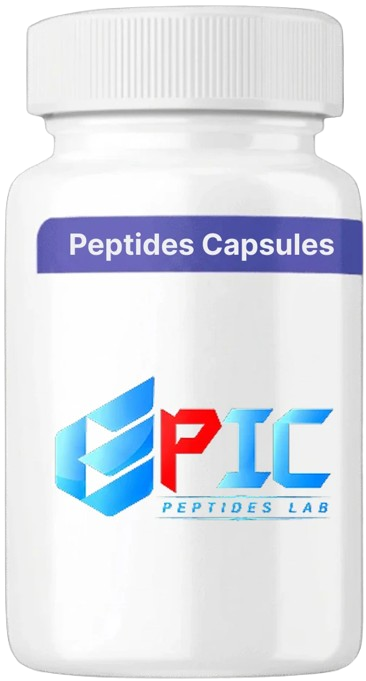
Tesofensine is a small molecule rather than a peptide, and it is supplied as capsules rather than as bulk powder in a vial. Both facts change what a certificate has to establish. Laboratory research use only.
Epic Peptides Lab · Research Use Only
Not a peptide, and the capsule is the article
Tesofensine is not a peptide. It has no sequence, no net peptide content and no counterion arithmetic, and it arrives as a dosed capsule rather than as powder in a vial. Every verification habit built on the rest of this catalogue has to be set aside here.
| Property | Value |
|---|---|
| Compound | Tesofensine |
| Development code | NS-2330 |
| Article type | Small molecule, not a peptide |
| Chemical class | Phenyltropane derivative |
| Molecular formula | C17H23Cl2NO |
| Molecular weight, calculated | Approximately 328.3 g/mol for the free base |
| CAS | 195875-84-4 |
| Reported mechanism | Inhibition of the dopamine, noradrenaline and serotonin transporters |
| Presentation | Capsules at a nominal 500 microgram fill |
| What that changes | The unit is a dosed presentation rather than bulk material |
| Salt form | Per certificate. Confirm whether the stated mass refers to free base or a salt |
| Sequence | Not applicable |
| Net peptide content | Not applicable |
| Regulatory status | No approved formulation in any jurisdiction. Development did not complete |
| Storage | Per certificate. Sealed, dry, protected from light |
Almost everything this catalogue says about verification assumes a peptide, and none of it transfers to tesofensine.
A peptide is checked by writing out its sequence and confirming the observed mass against the calculated one. Tesofensine has no sequence to write out.
A peptide certificate quotes net peptide content because the purified material carries counterions and water alongside the molecule. A small molecule supplied as a defined salt has no equivalent correction.
Purity by reverse-phase HPLC means something different too. On a peptide the impurities of interest are deletion sequences and oxidised species, which are chemically close relatives.
On a small molecule the impurities are synthesis intermediates, regioisomers and residual solvents, which are chemically unrelated and behave differently on a column.
What replaces the peptide checks is a structural identity determination, and there is no shortcut to it.
Nuclear magnetic resonance is the reference method, because it reports the connectivity of the molecule rather than only its mass.
Mass spectrometry alone is weaker here than it is on a peptide, since a small molecule can have isomers of identical mass and entirely different structure, whereas a peptide of a given mass has a strongly constrained set of possible sequences.
So a certificate offering only a mass and a purity percentage has established considerably less about tesofensine than the same document would about a peptide.
Asking whether an NMR spectrum was recorded, and against what reference, is the first question rather than the last.
The second departure is the format tesofensine is supplied in, and it changes the unit of analysis.
A vial of lyophilised powder is bulk material. Whatever the label says, the laboratory weighs or dissolves what is actually there and works from that.
A capsule is a dosed presentation. The whole point of it is that the contents are not weighed, which means the fill accuracy has to be right rather than merely recorded.
That introduces a quality attribute peptide vials do not have, which pharmacopoeias call content uniformity.
Content uniformity asks how much the actual fill varies between individual capsules from the same batch, not what the average is.
An average can be perfect while individual units vary widely, and for a 500 microgram fill a variation that would be trivial on a 10 mg vial is a large proportional error.
The excipients are the second consideration. A capsule contains a filler, usually a flow agent, and sometimes a colourant, and none of that is inert to every assay.
Dissolving capsule contents dissolves those excipients too. Some interfere with chromatography, with spectrophotometry, or with cell-based work.
Asking for the excipient list is reasonable and rarely answered. It is the difference between a defined preparation and an unknown one.
Where the work needs the compound rather than the presentation, bulk powder is the more sensible purchase and this format is the wrong article for it.
The published account of what tesofensine does is specific, and it is worth stating at the level the evidence supports rather than a level above it.
Three transporters return neurotransmitter from the synaptic cleft back into the presynaptic terminal: one each for dopamine, noradrenaline and serotonin.
Tesofensine is reported to inhibit all three, which is what the phrase triple reuptake inhibitor describes.
Compounds acting on one of the three are common and well characterised. Acting on all three is less common and it produces a pharmacology that is not the simple sum of three single-target effects.
The reason is that the three systems modulate each other. Raising synaptic availability of one changes the firing of neurons releasing another, so the net result depends on circuit-level interactions rather than transporter occupancy alone.
That has a direct consequence for study design. A binding assay at one transporter tells you about that transporter and very little about what the compound does in an intact system.
The published record includes both. There are transporter-level measurements and there is clinical work, and the two answer different questions.
The clinical programme covered more than one indication across its history, and it did not complete. No approved formulation exists anywhere.
Anyone citing the trial literature should name the indication and the endpoint, because the studies are not interchangeable and secondary sources routinely merge them.
A tesofensine certificate carries seven fields, and only two overlap with what a peptide certificate carries.
Structural identity by nuclear magnetic resonance, with the spectrum supplied or at minimum the key assignments stated.
Mass by high-performance liquid chromatography coupled to mass spectrometry, which confirms the molecular mass alongside the retention behaviour.
Purity by HPLC with the chromatogram and the detection wavelength, since a small molecule with a chromophore can be quantified far more conveniently than most peptides.
Which form the stated mass refers to, free base or a named salt. This matters as much here as it does for a peptide and the arithmetic is different.
Residual solvent figures, because small molecule synthesis uses organic solvents that a peptide synthesis does not, and some of them are consequential at low levels.
For the capsule specifically, the content uniformity data and the excipient list.
Lot number and manufacturing date.
A supplier who can produce an NMR spectrum has characterised the material. One who offers a mass and a percentage has bought it from somebody else and passed the paperwork along.
One additional field is worth asking for on any small molecule and is almost never volunteered.
The synthetic route, or at least the class of chemistry used, because it determines which impurities are plausible and therefore which ones a chromatogram should be examined for.
A supplier who cannot say how the compound was made is reselling, which is not itself a problem and does mean the analytical questions have to go further up the chain.
A tesofensine capsule is a delivery format rather than a laboratory reagent, and using one takes a decision that a vial does not.
The first option is to use the capsule as supplied and accept the excipients as part of the preparation.
That is defensible where the experiment tolerates them and it requires knowing what they are, which is a certificate question rather than an assumption.
The second option is to open capsules, pool the contents and weigh out from the pool.
Pooling averages the fill variation across units, which is the correct move where content uniformity data is unavailable or poor.
It also means the weighed material is compound plus excipient in unknown ratio, so a stated mass is not a mass of the compound.
Correcting for that needs the excipient fraction, which the certificate should give and usually does not.
The third option is to buy bulk powder rather than capsules, and for most laboratory work it is the right one.
Bulk material can be weighed directly, dissolved to a known concentration and characterised without an excipient correction standing between the balance and the answer.
Where the capsule format is what is available, pooling and recording the excipient basis is the honest compromise.
What is not defensible is treating the nominal 500 microgram figure as a mass of compound delivered into an assay, which is what happens when a capsule is dropped into solvent and the label is trusted.
Storing tesofensine is simpler than storing a lyophilised peptide, and the reasons are worth stating.
There is no backbone to hydrolyse, no methionine to oxidise, no disulfide to reduce and no aggregation route, so the failure modes that dominate the rest of this catalogue are absent.
Sealed, dry and out of direct light is generally sufficient. The certificate should state the intended temperature.
Moisture is the one shared concern, because capsule shells are hygroscopic and a softened shell is a handling problem before it is a stability problem.
Tesofensine is not freely water soluble in the way a charged peptide is, so a co-solvent is usually needed for solution work.
Dimethyl sulfoxide is the common choice and it carries its own constraints, since many cell-based systems tolerate only a low final percentage of it.
Preparing a concentrated stock and diluting into aqueous buffer is the standard approach, and precipitation on dilution is the failure to watch for rather than degradation.
Holding a diluted working solution up to the light before use takes a second and catches precipitation directly.
Record lot, the form the mass refers to, the solvent and final co-solvent percentage, and the date. Solvent composition belongs in the record here in a way that diluent composition does for a peptide.
Selected references on the pharmacology of this compound and on its clinical evaluation.
Is tesofensine a peptide?
No. It is a small molecule of the phenyltropane class, formula C17H23Cl2NO, calculated at approximately 328.3 daltons for the free base and carrying CAS 195875-84-4.
Why does that matter for verification?
Because it has no sequence to confirm and no net peptide content correction. The peptide verification habits have to be set aside entirely and replaced with structural identity work.
What replaces the peptide checks?
Nuclear magnetic resonance, which reports the connectivity of the molecule rather than only its mass. It is the reference method and there is no shortcut to it.
Is mass spectrometry enough on its own?
Weaker here than on a peptide. A small molecule can have isomers of identical mass and entirely different structure, whereas a peptide of a given mass has a strongly constrained set of possible sequences.
What does the capsule format change?
The unit of analysis. A vial is bulk material a laboratory weighs. A capsule is a dosed presentation whose whole point is that the contents are not weighed, so fill accuracy has to be right.
What is content uniformity?
How much the actual fill varies between individual capsules from one batch, rather than what the average is. An average can be perfect while individual units vary widely.
Why does that matter at 500 micrograms?
Because a variation that would be trivial on a 10 mg vial is a large proportional error on a fill this small.
Do the excipients matter?
Yes. A capsule contains a filler, usually a flow agent and sometimes a colourant, and dissolving capsule contents dissolves those too. Some interfere with chromatography or with cell-based work.
What is the reported mechanism?
Inhibition of the dopamine, noradrenaline and serotonin transporters, which is what triple reuptake inhibition describes. Acting on all three is less common than acting on one.
Is that the sum of three single-target effects?
No. The three systems modulate each other, so the net result depends on circuit-level interactions rather than transporter occupancy alone. A binding assay says little about an intact system.
Does it hold an approval?
No. The clinical programme covered more than one indication across its history and it did not complete. No approved formulation exists in any jurisdiction.
How should it be dissolved?
It is not freely water soluble like a charged peptide, so a co-solvent is usually needed. Dimethyl sulfoxide is common, and precipitation on dilution into buffer is the failure to watch for.
Tesofensine is sold exclusively for laboratory research use. It is not a drug, food, or cosmetic product, and it is not a dietary product of any kind. It is not approved by the FDA or any comparable authority for human or veterinary use, it is a small molecule rather than a peptide and the analytical methods that establish identity for a peptide do not establish it here, it is supplied as a dosed capsule presentation whose excipients form part of what is dissolved, the clinical programme did not complete and no approved formulation exists in any jurisdiction, and no compound in this range is offered for any human or veterinary purpose. This product is not intended to diagnose, treat, cure, or prevent any disease. It must not be given to humans or animals. Purchase is restricted to qualified researchers and institutions operating within applicable laws. All handling is the responsibility of the purchasing laboratory.
| Weight | 0.5 lbs |
|---|---|
| Dimensions | 3 × 3 × 4 in |
The same verification the labs that use our compounds demand — documented, transparent, and enforced on every order.

Independent HPLC and mass-spec testing confirms identity and purity on every batch.

A full certificate of analysis is published and downloadable for every lot we ship.

Tracked, discreet packaging with reshipment coverage on qualifying orders.

Orders confirmed before 12 PM PT on business days ship the same day from our US-based facility.
Enter your details to access our catalog, COA library,
and research compound database.
By submitting you agree to receive email communications from Epic Peptides Lab You can unsubscribe at any time. All products for in vitro research use only.

Restock alerts, new compounds and fresh lab results.
We’ll email your code straight away – 15% off, one-time use.
Research updates only. Unsubscribe any time.
Reviews
There are no reviews yet.